
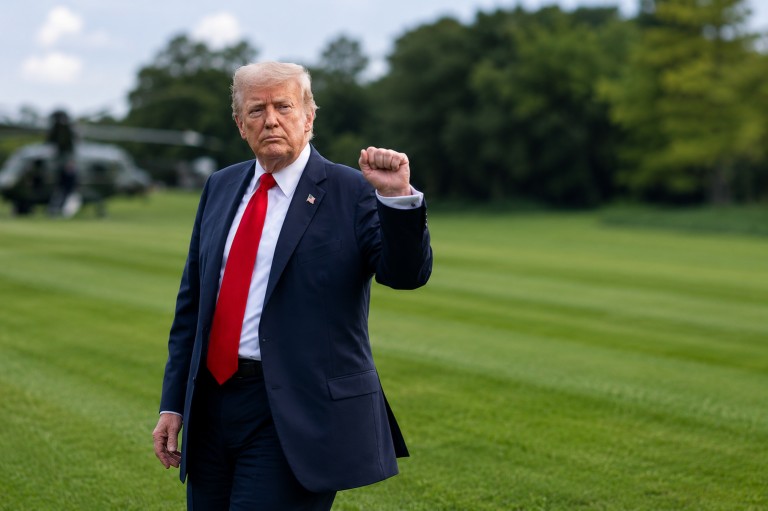
Confusion has arisen among NATO allies and defense officials following former U.S. President Donald Trump’s announcement to bolster American troop presence in Poland by 5,000 soldiers. This declaration came shortly after he had ordered a reduction of U.S. forces in Europe, which included scaling back troop rotations into Poland from Germany.
Earlier in the month, the U.S. administration unveiled plans to cut approximately 5,000 troops from the European continent, a move that stirred concerns among NATO members regarding the United States’ dedication to European security. The announcement to withdraw personnel led many to question the long-term strategy of U.S. military involvement in the region.
However, Trump’s later decision to deploy additional troops to Poland was justified by his administration as a testament to the robust relationship with Polish President Karol Nawrocki. This unexpected policy shift caught NATO allies and U.S. defense officials off guard, as adjustments to military strategies were already underway following the initial withdrawal announcement.
European leaders have acknowledged the uncertainty surrounding future U.S. military deployments, particularly as tensions with Russia persist due to the ongoing conflict in Ukraine. U.S. Secretary of State Marco Rubio noted that allies are aware of the United States’ ongoing review of its global military stance, hinting that troop numbers in Europe may eventually decline.
With roughly 80,000 U.S. troops currently stationed across Europe, NATO officials continue their discussions on defense strategies and troop commitments along the eastern flank of the alliance. NATO Secretary-General Mark Rutte has emphasized the importance of European nations enhancing their own security capabilities in conjunction with U.S. support.