
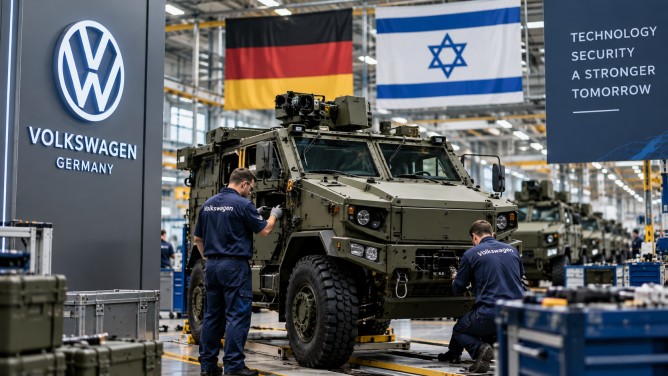
Volkswagen is set to transform its Osnabrück plant in Germany into a hub for defense production, following the conclusion of vehicle manufacturing there in 2027. The German automaker has initiated a partnership with Israeli defense firm Rafael to launch this new phase, marking a significant shift in the plant’s purpose. This move comes as part of a broader agreement to sell the facility to Tel Aviv-based Aurelius Capital, in collaboration with the state of Lower Saxony, one of Volkswagen’s major shareholders.
The agreement outlines plans for the facility to produce systems and components for air defense systems, targeting markets in Germany and other European nations. This transition aims to safeguard at least 1,200 jobs at the Osnabrück site while potentially paving the way for additional defense-oriented projects. Volkswagen highlighted that this could provide a fresh industrial direction for the plant, which had been slated for closure due to a combination of weak demand, high production costs, and intensified competition from Chinese automakers.
In 2024, Volkswagen announced its decision to halt vehicle production at Osnabrück as part of a significant restructuring effort, which includes plans to cut approximately 100,000 jobs across the group in the coming years. The shift to defense production at Osnabrück reflects a strategic response to these challenges, offering a possible blueprint for other Volkswagen facilities facing similar uncertainties.
Aurelius Capital emphasized the advantages of the Osnabrück plant, noting its skilled workforce, advanced manufacturing capabilities, and well-established production infrastructure, which would be difficult to replicate from scratch. The investment firm, which has interests in sectors such as cybersecurity, drone technology, and satellite systems, sees the plant’s conversion as a strategic opportunity.
This initiative highlights a growing trend across Europe, where defense production is being considered as a viable alternative for underutilized automotive plants. As industrial companies explore similar projects, the Osnabrück transformation could serve as a model for others seeking to repurpose their facilities in response to shifting market dynamics.