
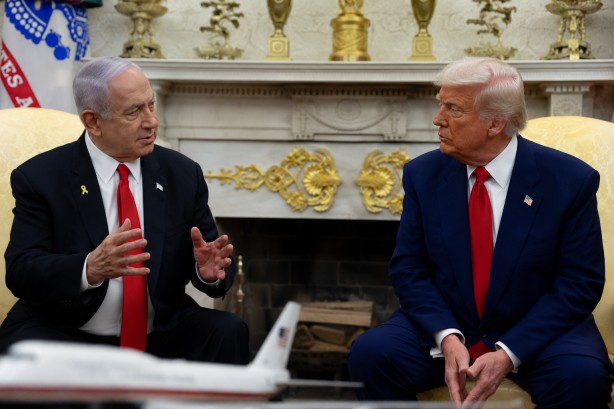
In a significant meeting at the White House, Israeli Prime Minister Benjamin Netanyahu and U.S. President Donald Trump engaged in extensive discussions centering on Iran, regional security, and the future trajectory of U.S.-Israel relations. A senior Israeli official conveyed that the leaders examined three potential strategies concerning Iran: pursuing diplomatic agreements, intensifying economic sanctions, or contemplating military action. The dialogue was characterized as an exchange of perspectives rather than a push towards any particular course of action.
During the meeting, Netanyahu voiced skepticism about Iran’s commitment to any future agreements but refrained from advocating for new military strikes by the U.S. Both leaders reaffirmed their mutual goal to prevent Iran from acquiring nuclear weapons. They also explored methods to amplify economic pressure on Tehran while mitigating repercussions on global energy markets. Netanyahu emphasized the importance of ensuring Iran does not exploit the Strait of Hormuz as leverage in negotiations.
Security issues in the region, particularly concerning Israel’s military presence in Syria and southern Lebanon, were addressed in detail. Netanyahu reportedly used maps to illustrate Israel’s security challenges and stressed the necessity of maintaining defensive positions to counter potential threats. The discussions underscored the continued importance of regional stability and security.
The conversation also encompassed long-term defense collaboration between the U.S. and Israel. Netanyahu proposed a gradual reduction in Israel’s dependence on American military aid over the next decade, coupled with an expansion of joint defense research and development initiatives. This proposal reflects a vision of evolving defense cooperation and shared technological advancements.
Despite circulating reports of tensions between the two leaders, the Israeli official dismissed these claims, describing their relationship as both close and cooperative. The ongoing dialogue over regional policy underscores the robust nature of U.S.-Israel relations, with both leaders committed to navigating complex geopolitical challenges together.