
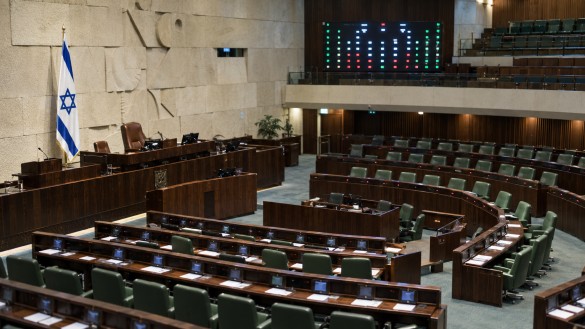
Israeli Prime Minister Benjamin Netanyahu’s political future hangs in the balance as election results indicate his bloc has fallen short of a parliamentary majority. The final tally reveals that Netanyahu’s coalition secured 53 seats, while the main opposition alliance gathered 48 seats in the 120-member Knesset. With 61 seats required to form a government, neither side can claim power without forming alliances with other political factions.
A significant development in this election is the rise of Arab-led parties, which captured 19 seats, marking their strongest performance to date. This positions them as potential kingmakers in the upcoming coalition negotiations. The opposition, led by Gadi Eisenkot, could potentially band together with these Arab-led parties to form a government, potentially securing a majority of up to 67 seats. However, such cooperation could face substantial pushback from right-wing politicians and segments of the electorate.
Arab citizens, who make up about 20% of Israel’s population, have increased their political influence by turning out in strong numbers and expressing opposition to Netanyahu’s far-right allies. Nonetheless, Netanyahu has criticized the possibility of an opposition government leaning on Arab party support, citing national security concerns.
Another possible scenario is a national unity government that includes both Netanyahu and opposition leaders. However, Eisenkot and his allies have consistently rejected joining a government under Netanyahu’s leadership, citing dissatisfaction with his handling of security issues, particularly those surrounding the Hamas attack on October 7, 2023, as well as concerns about the state of democratic institutions under his tenure. Netanyahu’s ongoing corruption trial further complicates potential cooperation.
Tensions have been further inflamed by allegations of foreign interference in the election process. Israel’s election authorities have called for an investigation by the Shin Bet security agency following claims of irregularities. While Qatar has denied any involvement, election officials emphasize that unverified allegations should not cast doubt on the legitimacy of Arab voters or the final results.
If coalition negotiations fail, Israel could be headed for another election early next year, with Netanyahu’s government remaining in a caretaker role. The ongoing political deadlock mirrors previous periods of repeated elections in the country. The final results are due to be submitted to President Isaac Herzog, who will select a candidate to attempt forming the next government, with the new Knesset set to be sworn in on November 10.