
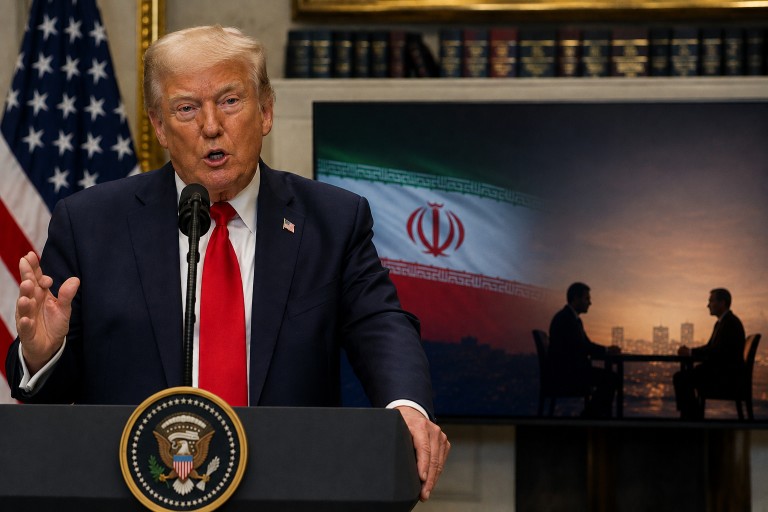
President Donald Trump announced that a planned military strike against Iran was halted after receiving indications that negotiations were nearing a framework agreement. This potential agreement aims to reopen the Strait of Hormuz and address international concerns surrounding Iran’s nuclear ambitions. According to Trump, the decision to call off the attack followed appeals from Iran and several Middle Eastern nations, with Israel also backing the move.
However, Iran disputed Trump’s assertion that it had sought a halt to the military action, labeling the claim as false. Iranian authorities emphasized that their military forces remain on high alert, poised to respond decisively to any aggression from the United States or Israel. They cautioned that any military intervention could provoke significant retaliation, possibly targeting key regional energy infrastructure.
The tension between the U.S. and Iran has cast a shadow over global energy markets, particularly concerning the critical shipping lane of the Strait of Hormuz. The continued uncertainty has led to disruptions in maritime traffic through this crucial channel, which is vital for global oil supplies, further exacerbating fears over regional stability and energy security.
Amid these developments, the international community watches closely, aware that any escalation could have far-reaching consequences. The situation underscores the delicate balance of diplomacy and military readiness in one of the world’s most strategically significant regions. Both the potential for diplomatic resolution and the risk of conflict remain high as stakeholders navigate these complex dynamics.